The one material upgrade that prevents rust complaints, EU compliance headaches and “it turned my skin green” reviews
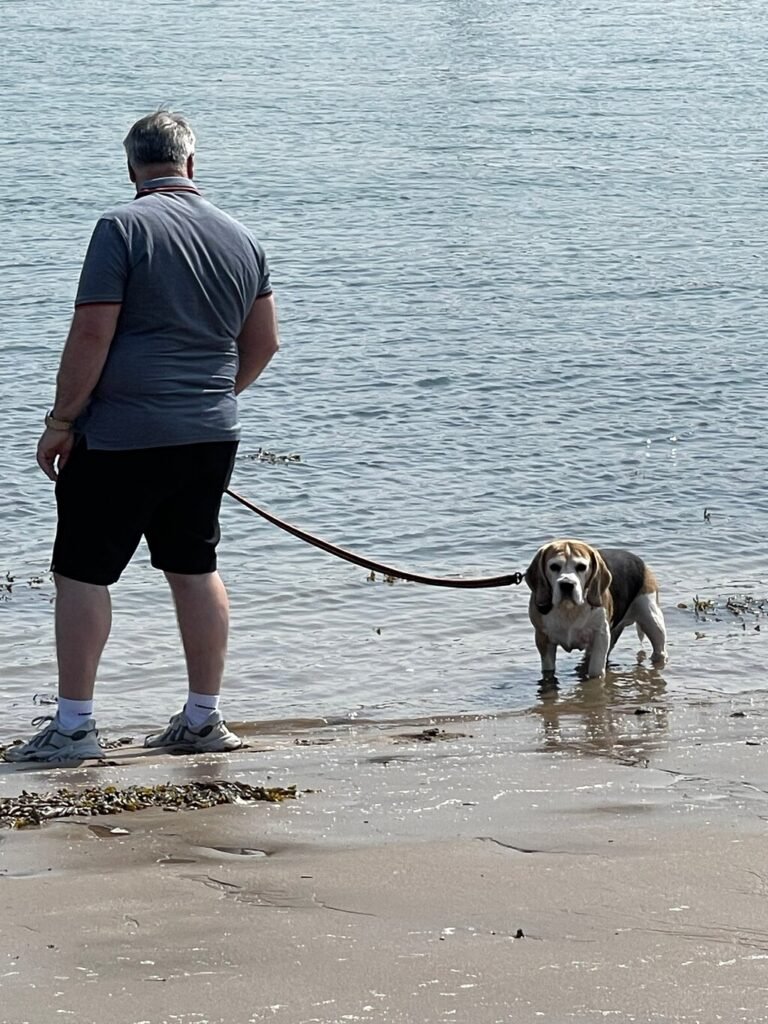
A maker brand in Devon, England came to us for hardware for dog leads.
Their whole story is coastal. Recycled climbing rope and repurposed sailing rope, sold at markets in seaside towns, worn on beaches and in salt air. The metal parts — O rings, trigger snaps, shackles — sit right at the centre of that story.

Walking a dog on the beach is one of the hardest environments for hardware. The O rings, trigger snaps and shackles on a lead meet seawater, wet sand and salt-laden air every single time they are used — which is exactly what 316L exists for.
The natural instinct is to quote 304 stainless steel. It is the most common grade, the most available, and the cheapest.
We recommended 316L.
Not because we make more money on it — the material costs us more too. We recommended it because a rust spot on a “coastal” product does not just fail a part. It fails the story the brand is selling, and it turns into a return, a bad review, and a customer who does not come back.
This article explains why, and — just as importantly — when 304 is perfectly fine and you should not pay the extra.
The short answer
| 304 stainless | 316L stainless | |
|---|---|---|
| Chromium | ~18% | ~16–18% |
| Nickel | ~8% | ~10–14% |
| Molybdenum | None | 2–3% |
| Carbon | Standard (304L = low carbon) | Low (that is what the L means) |
| Chloride resistance | Adequate inland | Much better |
| **Typical PREN*** | ~19 | ~25 |
| Saltwater / sea air | Can pit or surface-rust | Recommended |
| Sweat, everyday wear | Usually fine | Better margin |
| Nickel release (EU) | Often passes when passivated | Better margin when passivated |
| Relative material cost | Lower | Higher |
| Choose it for | Indoor, inland, dry, fashion | Beach, coastal, sport, sweat, sensitive skin |
*PREN (Pitting Resistance Equivalent Number) is a rough index, not a standard. Typical values vary with exact composition and specification.
What actually differs: one element
The gap between 304 and 316L comes down to molybdenum, at roughly 2–3%.
That single addition is what makes 316/316L resistant to chlorides — the thing that actually attacks stainless steel in the real world. Chlorides are in:
- Seawater and sea air — the obvious one
- Sweat — which is why jewellery worn during sport or in summer fails faster
- Pool water — chlorinated
- Tap water and cleaning products — to a lesser degree
When chlorides break through the passive layer faster than it can reform, you get pitting: small, ugly, localised rust spots. It does not look like general corrosion; it looks like a defect, and customers read it as “cheap metal.”
304 has no molybdenum. That is the entire difference, and it is the only reason 316L exists.
What happens to 304 in saltwater
304 is genuinely corrosion-resistant. It is not a bad material — it is the most used stainless grade in the world for good reason.
But put it near the sea and the margin disappears. On a bracelet worn at the beach, on a dog lead used on a coastal walk, on hardware stored in a damp beach house, 304 can develop:
- Surface rust bloom — a brownish film, usually removable but alarming
- Pitting — small permanent spots, especially where salt water sits and dries rather than being rinsed off
- Crevice corrosion — in joints, under crimps, inside holes where water gets trapped and stays
The important detail: this is not a manufacturing defect. A 304 part can be perfectly made and still rust in that environment. Which means if you specify 304 and sell it as beach-appropriate, you have written a complaint into your product.
Skin contact: the other half of the argument
Corrosion is the visible failure. Nickel release is the invisible one — and it is the one that can stop you selling into a market at all.
Both 304 and 316L contain nickel. Neither is nickel-free. What keeps them wearable is a stable chromium-oxide passive layer that holds the nickel in.
Under EU REACH, nickel release from articles in prolonged contact with the skin is restricted. Measured by EN 1811, the limits are:
- 0.5 µg/cm²/week for general prolonged skin contact
- 0.2 µg/cm²/week for post assemblies used in pierced parts
In practice:
- Titanium — contains no nickel. No issue.
- 316L, passivated — generally passes with the best margin of the stainless grades.
- 304, passivated — often passes, but with less margin.
That “less margin” is the point. A test result near the limit is a business risk: a change of supplier, a batch with slightly different surface finish, or a customer who wears it in sweat and salt, and you can cross the line.
We supply material certificates and can arrange nickel release testing. Ask for the report before you make a market claim, not after.
(Note: confirm the current regulation for your specific product category. This is a summary, not legal advice.)
The step that matters as much as the grade: passivation
Specifying 316L is only half the job. Passivation is the other half, and it is the step buyers most often skip without knowing it.
Passivation is a chemical treatment — typically nitric or citric acid — that does two things:
- Removes free iron left on the surface from machining, tooling and handling. Those microscopic iron particles are what rust first, and they are not the alloy’s fault.
- Promotes a thicker, more uniform chromium-oxide layer — the passive film that does the actual protecting.
The result: measurably better corrosion resistance, and lower nickel release.
We offer passivation as a standard finishing option. On a part worn against skin or near saltwater, we consider it mandatory rather than optional — and it costs a fraction of the difference between 304 and 316L, so it is the highest-value thing you can add.
“Marine grade” — what that claim actually means
You will see 316 and 316L sold as marine grade. It is a widely used and broadly honest description, but it is worth knowing what it does and does not promise.
It does mean: markedly better resistance to chlorides than 304, and the grade specified for marine hardware, boat fittings and coastal architecture for good reason.
It does not mean: immune. 316L can still pit in warm, stagnant, oxygen-poor seawater — under a crimp, inside a tightly wrapped joint, or anywhere salt sits and is never rinsed.
Two practical rules follow from this:
- Rinse in fresh water. It is the single most effective thing a wearer can do, and worth putting on your care card.
- Avoid designs that trap water. A joint that cannot dry out will eventually suffer, whatever the grade.
When 304 is genuinely the right choice
We are a machine shop, not a material seller, and we would rather sell you the cheaper part when it is correct.
Choose 304 if:
- The part is worn inland and indoors
- It is fashion jewellery worn occasionally, not daily
- It will not meet sweat, saltwater or pool water
- You are selling outside the EU, or your compliance advisor is satisfied with the margin
- Budget is the binding constraint and the environment is genuinely mild
On a decorative clasp on a bag, a pendant worn occasionally, a component in a dry indoor product — 304 will perform well for years and 316L buys you nothing.
The upgrade matters in proportion to the environment. The more salt and sweat, the more it is worth paying for.
What the upgrade actually costs
The honest version: 316L costs more than 304, and we are not going to pretend otherwise. The premium comes from three places:
- Material — the alloy itself, with molybdenum and a higher nickel content
- Machining — 316L is tougher and work-hardens more readily than 304, so it is slower to cut and harder on tools
- Availability — slightly less commodity-grade stock in some forms
But put it in context. On a small clasp or finding, the material is a tiny fraction of your total product cost — far smaller than your retail price, your packaging, or a single return.
The arithmetic that matters is not “304 vs 316L per kilo.” It is the cost of one warranty return, one bad review, or one failed compliance test against the cost of the upgrade across your whole first run. On a small part, the upgrade almost always wins.
And if you want to reduce it: prototype in 304, produce in 316L. Because CNC machining needs no mould, switching material between your prototype run and production costs nothing in tooling.
How we decide with a customer
When a drawing arrives and the material line is blank or says only “stainless steel,” we ask three questions:
- Where is it worn? Beach, coastal, pool, sport, or everyday indoor?
- Where do you sell? EU (nickel release), US, worldwide?
- What is the claim on the packaging? “Beach safe,” “sweat-proof,” “hypoallergenic,” “marine grade”?
If the answer to any of those involves salt, sweat, or a compliance claim, we recommend 316L with passivation and say so plainly.
Real examples from our enquiries:
- A UK maker brand making dog leads from recycled sailing rope for coastal markets → 316L, passivated
- A US brand developing a closure worn against skin, selling into a compliance-conscious market → 316L, passivated, with nickel release documentation
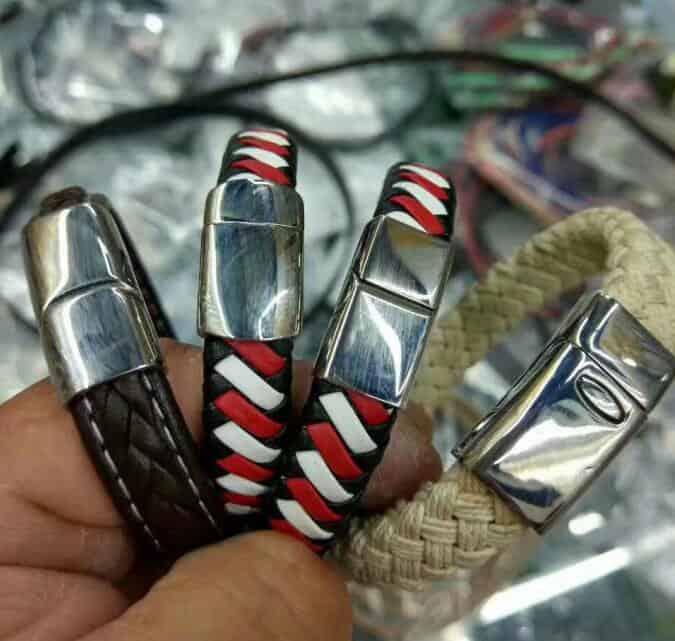
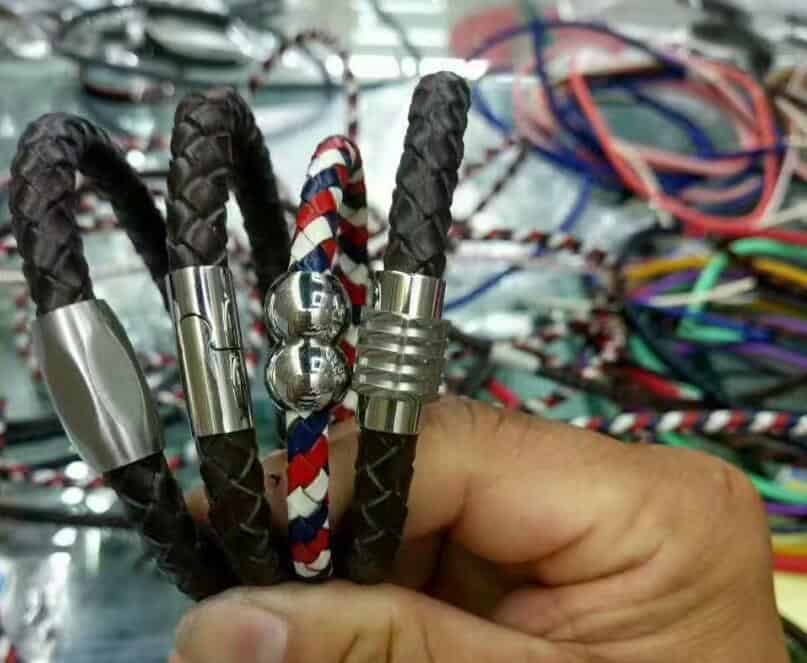
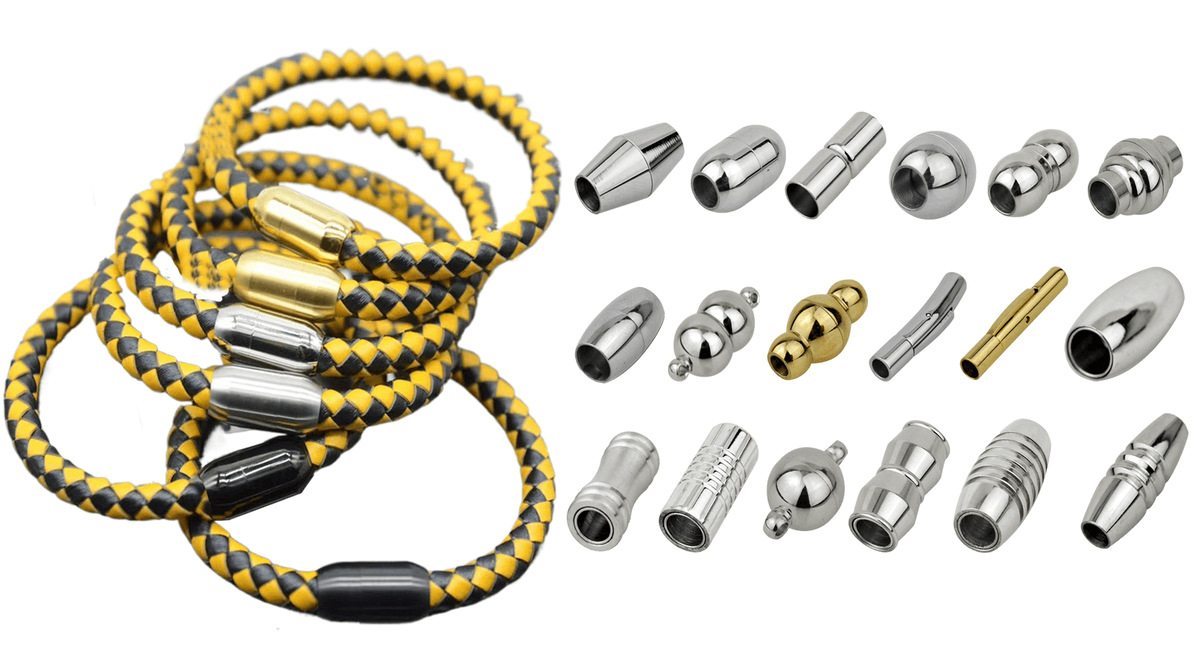
- A Dutch mother-and-daughter studio making leather and natural stone bracelets sold at open-air markets, worn daily → 316L for the clasps, because “worn every day, outdoors, in a country where it rains” is exactly the use case the grade exists for
- A designer developing a necklace clasp for a 2027 collection, intended for daily wear → 316L recommended over 304
For full comparisons including titanium and brass, see Stainless Steel vs Brass vs Titanium.
One thing to check first
Before you optimise the grade, confirm the part can be machined at all.
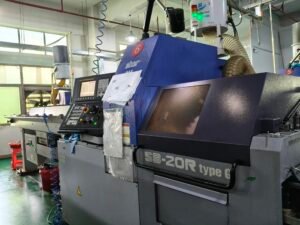
We are a CNC machining shop in Dongguan. We cut parts from solid bar and tube — we do not cast. If your component has an enclosed cavity or a shape a cutting tool physically cannot reach, no grade of stainless steel will save it; it needs a foundry, and we will tell you so rather than quote for it.
Our 30-second check tells you whether to send us the drawing at all — worth doing before you spend a week on emails.
Send us the drawing
Tell us where the part will be worn, where you sell, and what you want to claim on the packaging. We will tell you which grade we would use and why — and we will say so if 304 is enough.
Send us your drawing. Minimum order 10 pieces, functional samples in about three weeks, no mould required.
Frequently asked questions
Q: What is the difference between 304 and 316L stainless steel?
Molybdenum. 316L contains roughly 2–3% molybdenum and 304 contains none, which is what gives 316L much better resistance to chlorides — saltwater, sea air and sweat. 316L also has a higher nickel content and lower carbon.
Q: Does 304 stainless steel rust in saltwater?
It can. 304 will resist corrosion in normal environments, but near saltwater it is prone to surface rust bloom, pitting and crevice corrosion, especially where salt water sits and dries rather than being rinsed off. It is not a manufacturing defect — the grade simply has little margin in that environment.
Q: Is 316L completely rust-proof?
No, and it is worth being honest about it. 316L resists chlorides far better than 304, but it can still pit in warm, stagnant seawater or anywhere salt is trapped and never rinsed. Rinsing in fresh water and avoiding water-trapping designs matter as much as the grade.
Q: What does the “L” in 316L mean?
Low carbon. The lower carbon content reduces the risk of sensitisation and intergranular corrosion, which is why 316L is preferred for welded parts and, in our experience, for skin-contact products.
Q: Which stainless grade is better for skin contact?
316L, passivated, gives you the best margin of the common stainless grades. Both 304 and 316L contain nickel, but the passive layer holds it in. If you need a guaranteed nickel-free option, titanium is the answer.
Q: What are the EU nickel release limits?
Under REACH, articles in prolonged contact with the skin are limited to 0.5 µg/cm²/week measured by EN 1811, and 0.2 µg/cm²/week for post assemblies in pierced parts. Confirm against the current regulation for your product category, and test rather than assume.
Q: What is passivation and do I need it?
Passivation is a chemical treatment that removes free iron from the surface left by machining, and promotes a thicker chromium-oxide passive layer. It improves corrosion resistance and lowers nickel release. On anything worn against skin or near saltwater, we treat it as mandatory rather than optional.
Q: Can I prototype in 304 and produce in 316L?
Yes. CNC machining requires no mould, so changing material between your prototype run and production costs nothing in tooling. Many customers validate fit and feel in 304 and then switch to 316L for production.
Q: Is 316L worth the extra cost?
Usually yes for small parts — the material is a tiny fraction of your product cost, while one return, one bad review or one failed compliance test costs far more. If the part is worn inland, indoors and occasionally, 304 is genuinely enough and we will say so.
Kaiming (kmintjewelry.com) / Dongguan Kaiming Stainless Steel Jewelry Co., Ltd. — CNC machining of precision components in stainless steel, titanium and brass. 50+ CNC machines including 6 Japanese Star Swiss-type lathes, 1,000㎡ workshop, tolerances to ±0.01 mm, 10-piece minimum order.