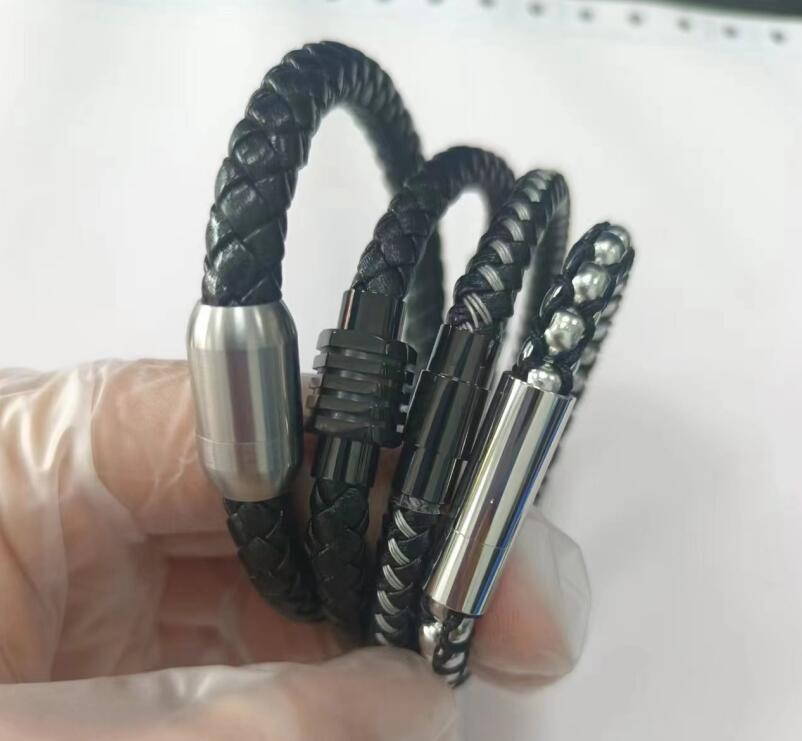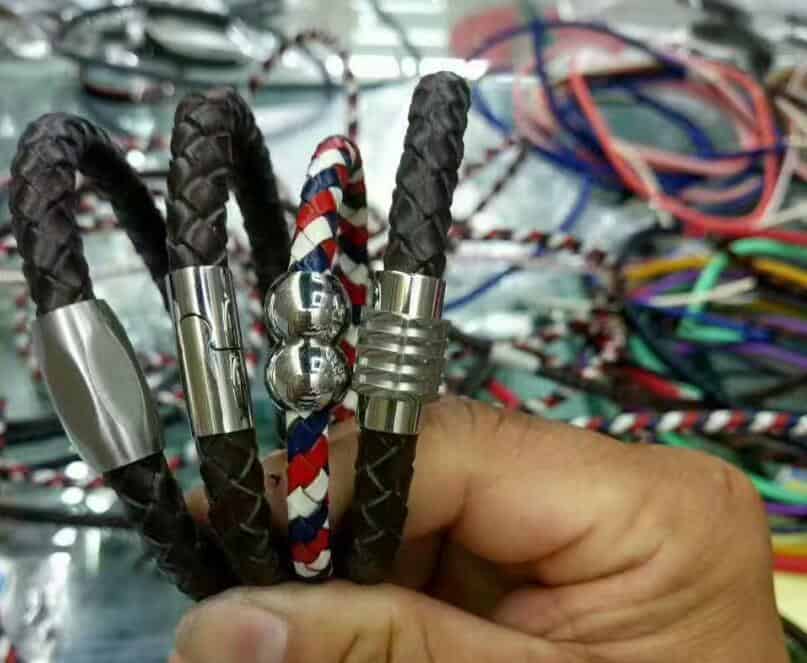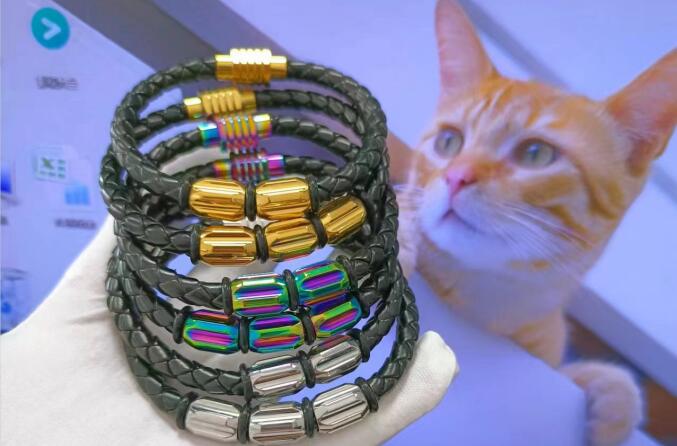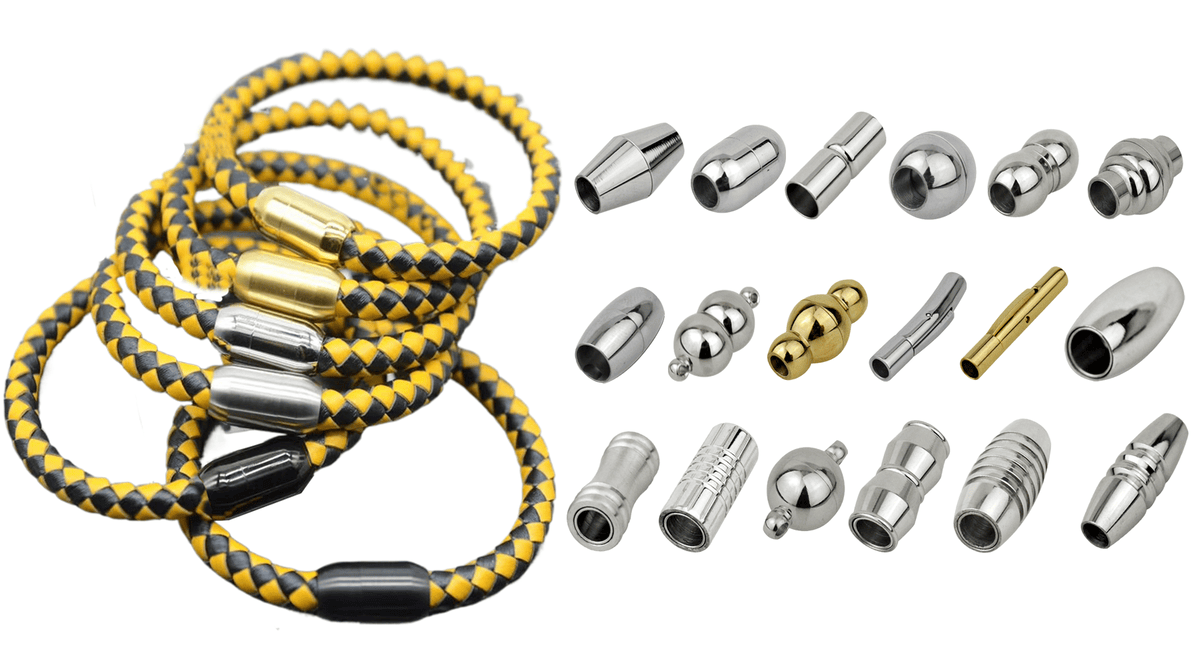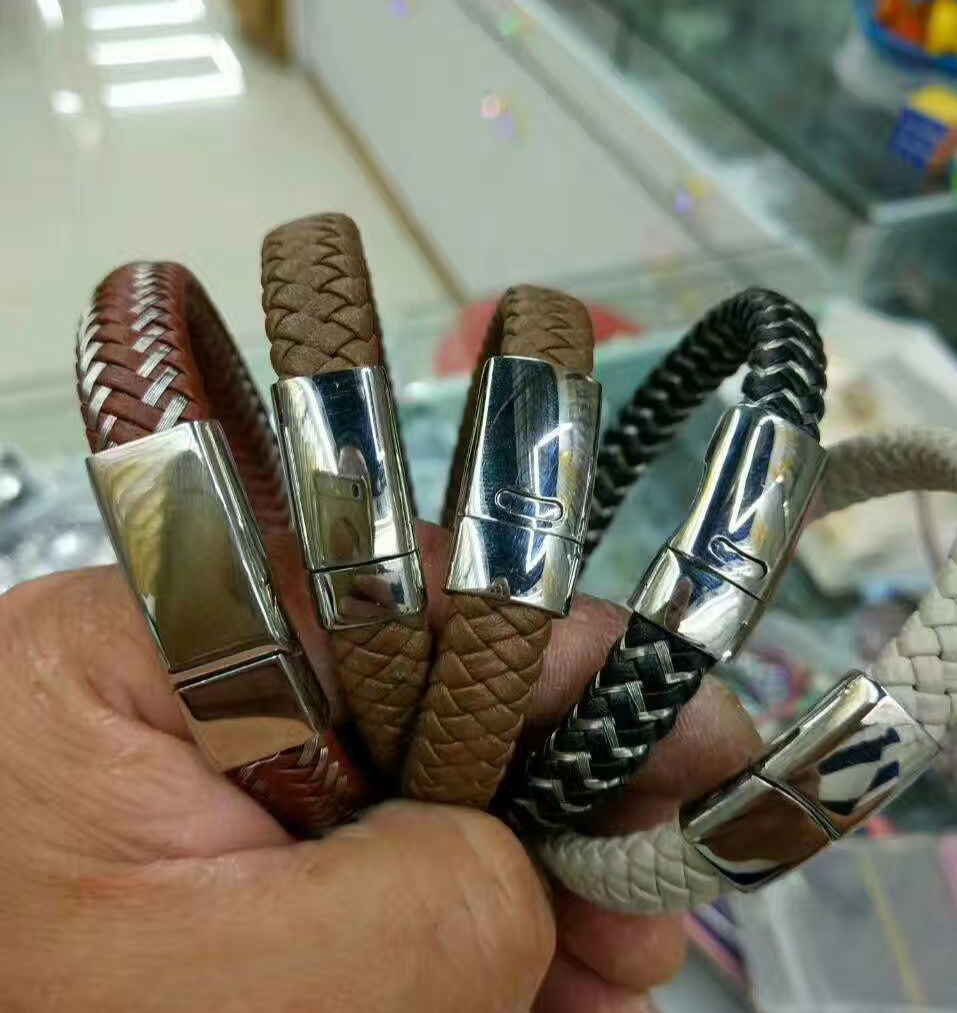
Stainless steel magnetic clasps play a crucial role in connecting leather cords, bracelets, necklaces, and other jewelry clasp accessories.
The most common materials used in the production of stainless steel magnetic clasps are 304 and 316L. This is because both materials exhibit significant advantages in corrosion resistance and durability. Notably, 316L stainless steel, containing molybdenum (Mo), boasts its corrosion resistance compared to 304 stainless steel.
If you are looking for stainless steel magnetic jewelry clasp manufacturers on platforms like Made-in-China or Alibaba, you’ll notice that many of them specify the use of 316L stainless steel in their material descriptions.
Once a customers raised the following question to me: “How to test the metal of a magnetic clasp to verify its 316L stainless steel?”
As a professional stainless steel magnetic jewelry clasps manufacturer, I’d like to introduce a straightforward method for determining the authenticity of 304 and 316L stainless steel magnetic clasp materials.
This method requires the use of two chemical reagents:
- Steel Grade Tester for SS 201-304: Used for detecting 304 stainless steel.
- Steel Grade Tester for SS 316L: Specifically designed to test 316L stainless steel.
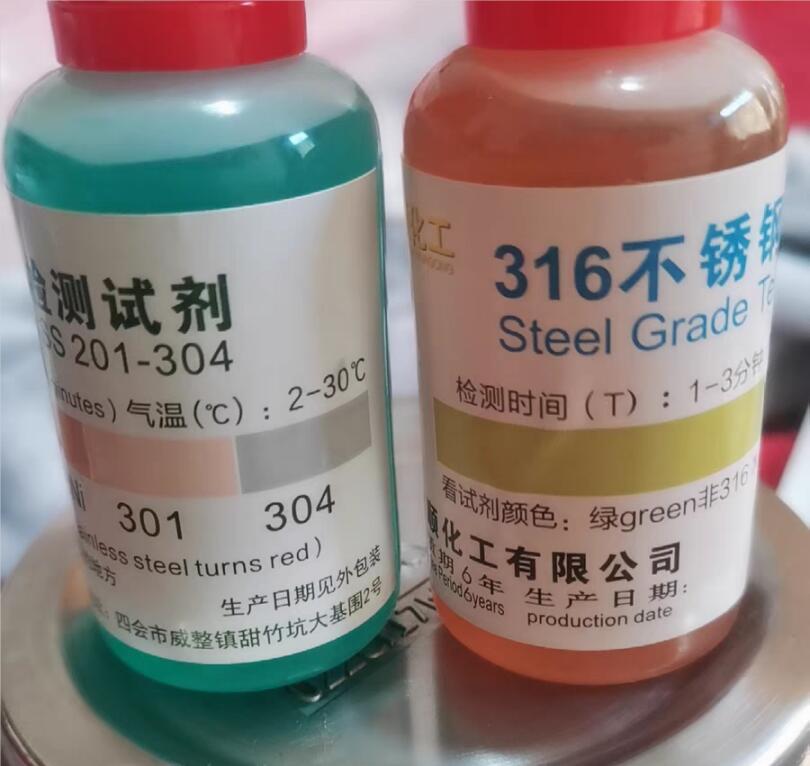
Method to Verify its Authenticity
The operation method is quite simple:
Step 1: Thoroughly clean the surface of the stainless steel objects.
Step 2: Drop 1-2 chemical reagents directly onto the stainless steel surface and observe the color change to match the color code.
Judgment Criteria:
Reagent for 201-304 stainless steel: If the stainless steel surface turns red, it indicates it’s not genuine 304 stainless steel. Authentic 304 stainless steel does not change color.
Reagent for 316L stainless steel: When reacting with stainless steel, it only turns green or black. Turning green means it’s not 316L, while turning black indicates 316L (the higher the quality, the more uniform the black color and the longer it maintains). This is because 316L stainless steel contains the chemical element molybdenum(Mo), which reacts to the reagent.
Both 304 and 316L are excellent materials for producing stainless steel magnetic clasps. However, solely relying on a few images or product descriptions makes it challenging to assess their true quality.
Mastering this method can assist you in avoiding procurement pitfalls and ensure you purchase stainless steel magnetic clasps made of genuine materials. However, for the most reliable assurance, we recommend you seeking out professional testing institutions for sample testing, which can provide spectral and chemical composition analysis reports.